
Recurring events — rules, upcoming occurrences, exceptions
New recurrences work as an RRULE master with virtual occurrences, and older recurring groups are still manageable.
Creating a recurring event
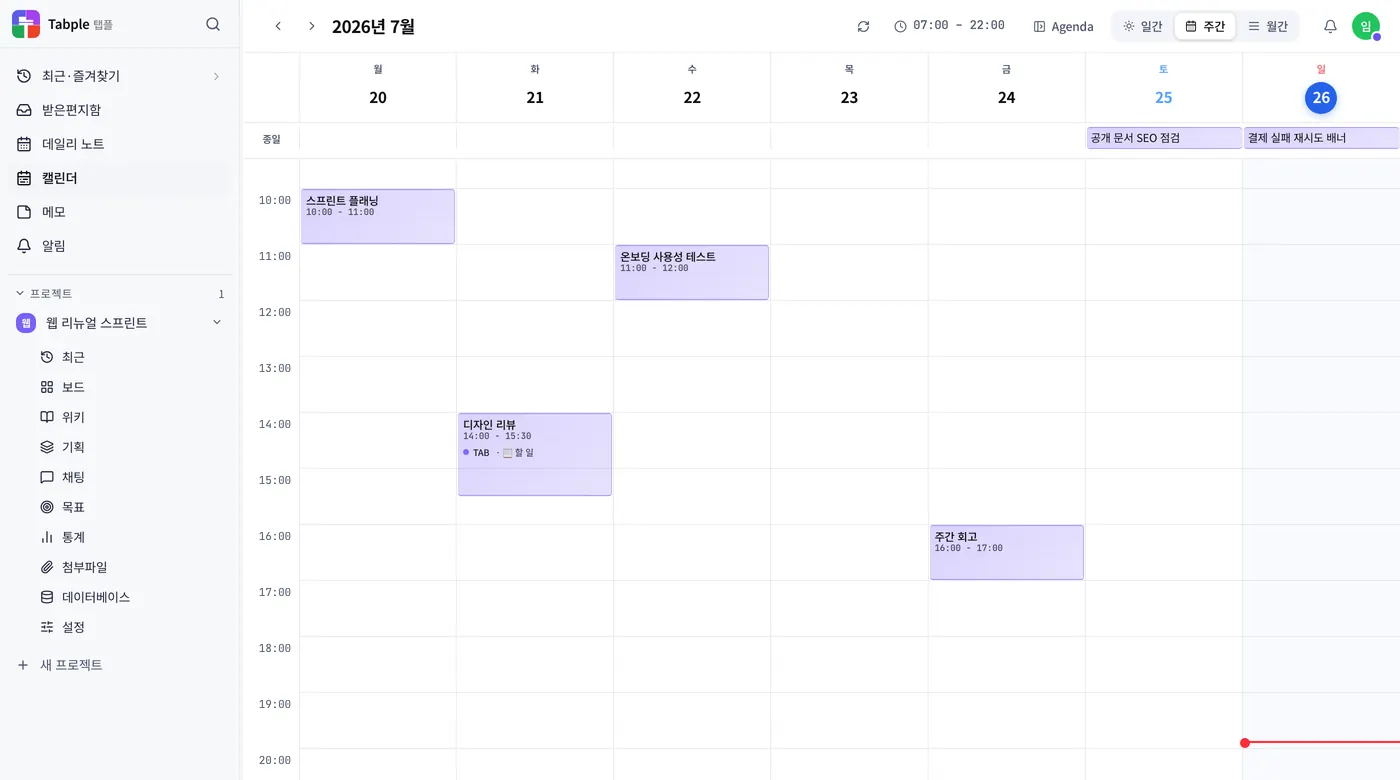
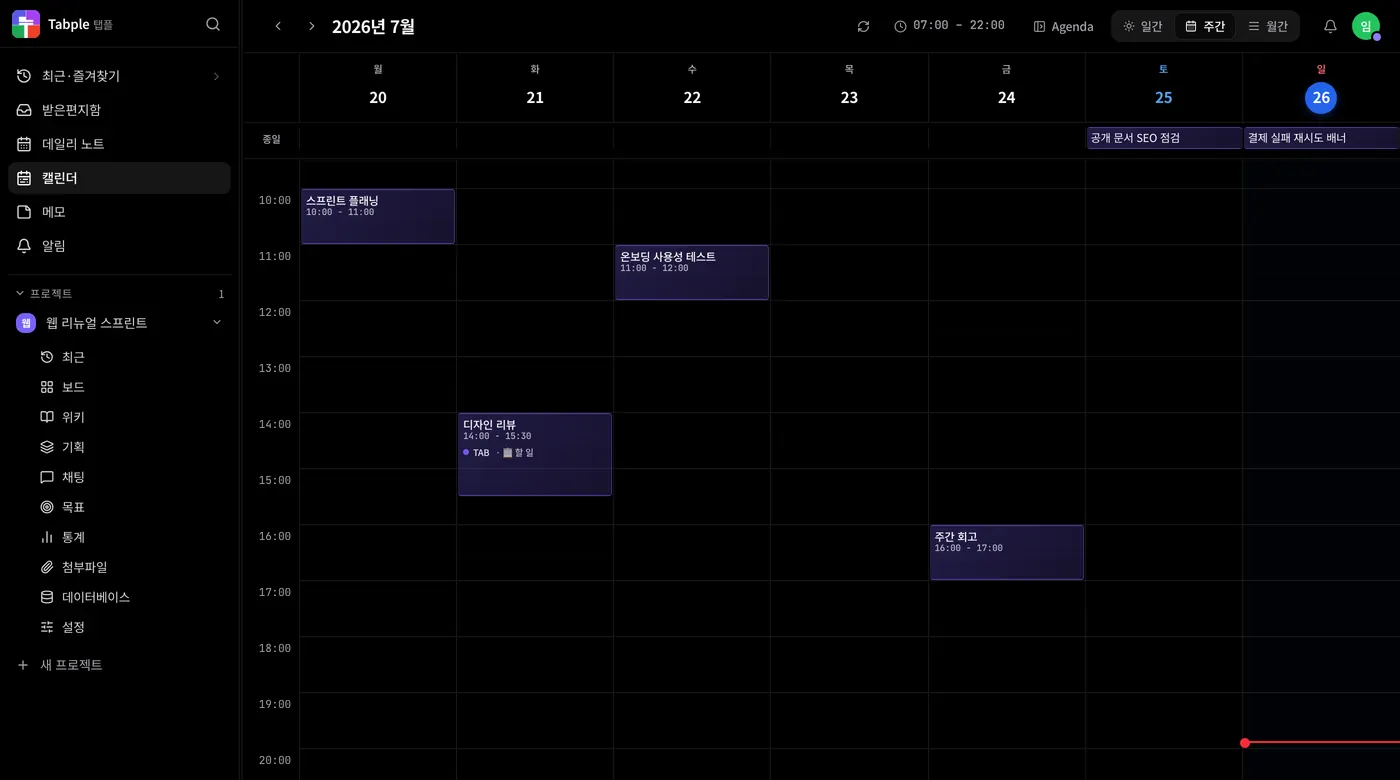
Calendar day or week view
Go to /calendar, then press D (day) or W (week). Drag an empty stretch of the time grid to open the new event modal.
Pick a repeat pattern
In quick add, choose none, daily, weekly, or monthly. Weekly follows the weekday of the start date, monthly its day of the month.
End condition
Choose repeat forever, repeat N times, or until a specific date. An end date earlier than the start, or a rule with no occurrences, won't save.
One master is saved
Saving a recurrence does not create N future events. Only one master task carrying the recurrence rule (RRULE) is stored, and upcoming occurrences are expanded to match the range the calendar is showing.
Advanced rules
Advanced recurrence rule in the task detail gives finer control over yearly repeats, intervals, several weekdays, counts, and end dates.
Handling upcoming occurrences one at a time
- Opening an upcoming occurrence, or moving it to another date or column, turns just that occurrence into a real task. The master and the remaining occurrences stay as they are.
- Once an occurrence is a real task, you can edit its title, assignee, due date, and completion individually, like any other task.
- Skipping a single upcoming occurrence hides that date on the calendar and keeps showing the ones after it.
The recurrence marker and the upcoming-occurrence note on the calendar show that an event belongs to a series. An upcoming occurrence is a calendar marker, not yet a task in the database.
Changing the series rule
Open the master event
Open the original task that carries the recurrence rule to change or remove the rule. The changed rule applies to how the calendar expands from then on.
The series survives
Materializing or skipping one occurrence does not remove the master's rule. Removing the rule is what stops new upcoming occurrences from appearing.
Check the end condition
A rule with a COUNT or UNTIL end condition shows no occurrences past that boundary. Change the count or the end date, then check the result on the calendar.
Older recurring groups still work
- Recurring events created earlier may be several real tasks tied together by
recurrence_group_id. This shape isn't used for new recurrences, but existing data keeps showing up and stays manageable. - When you edit or delete an older recurring group, you can choose the scope: This event only / This and all following events / All events in the series.
- The new master-plus-rule model and older recurring groups are different formats, so don't merge them or edit them as if they were one series.